
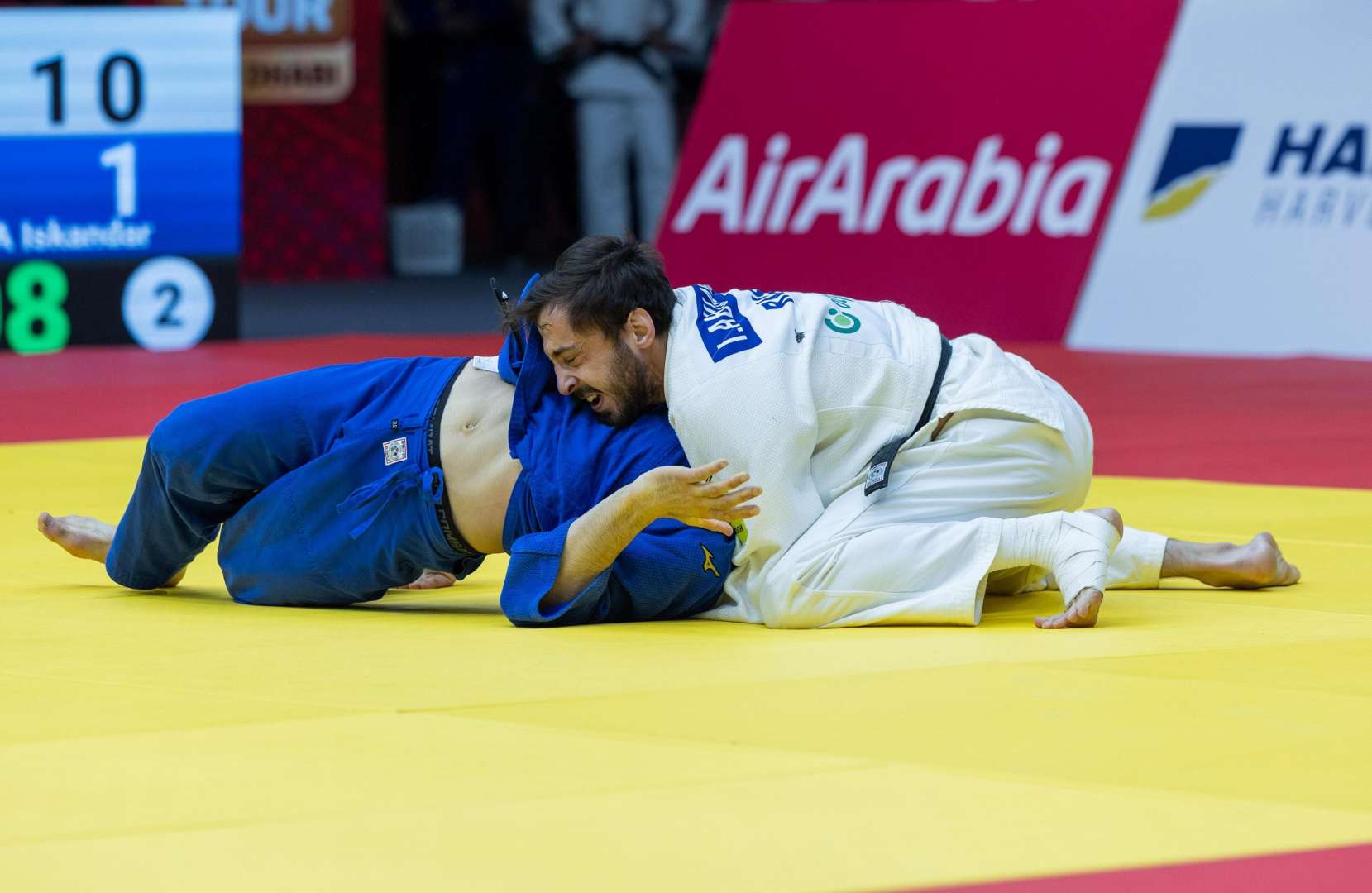
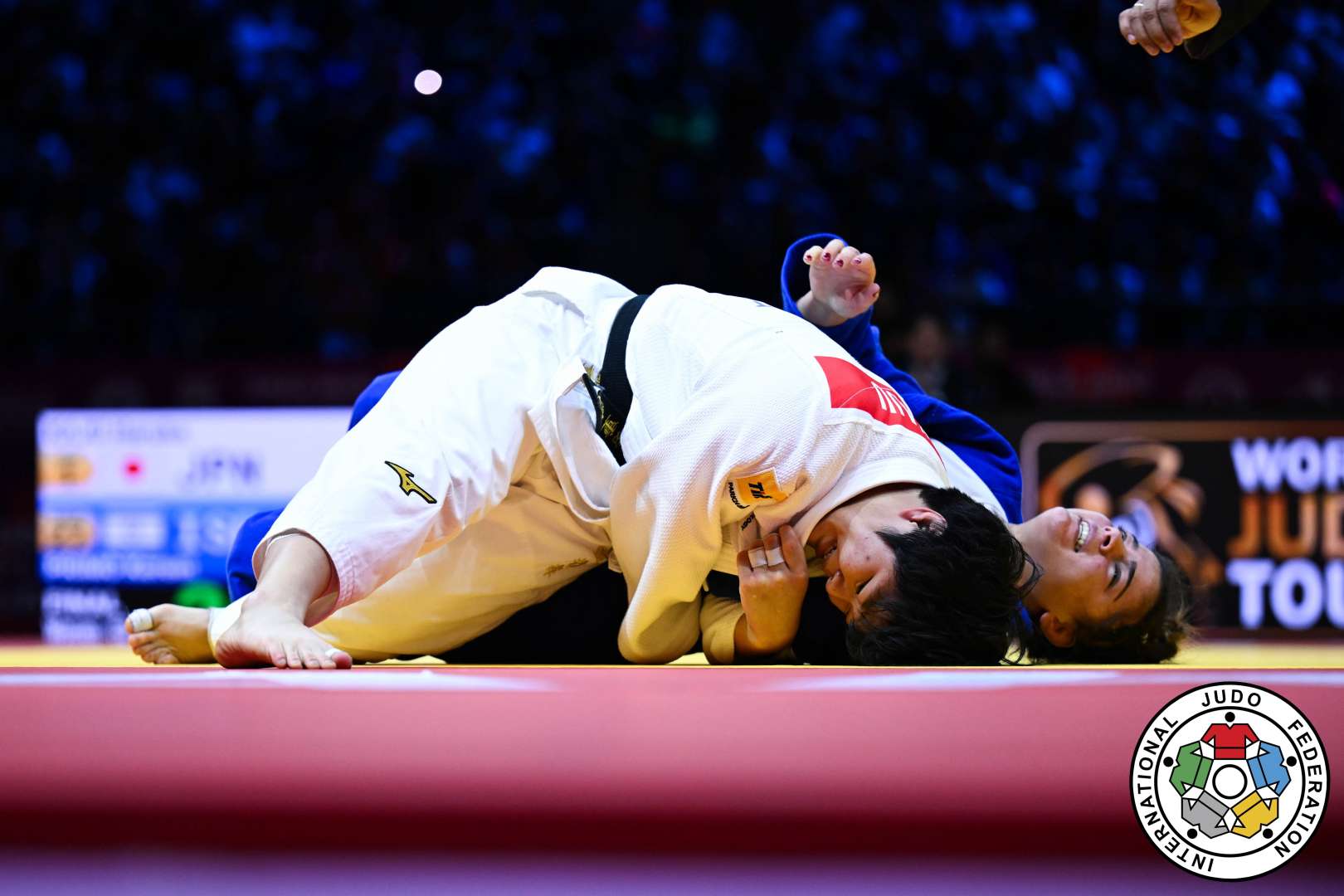
On the World Judo Tour, the biggest names look to ne-waza, not as a last resort but as a set of well-drilled situational answers to deliver wins; ne-waza can often be seen as the decider. Close contests fought in tachi-waza for the majority of normal time can be concluded on the ground, one judoka making the choice to change the entire rhythm and trajectory of the fight.
One of the biggest examples of this is Haruka Kaju (JPN). Unbeaten on the international circuit, the double world champion has a full compliment of solutions. From her last ten contests, five were won in ne-waza, three by penalties and two in tachi-waza. Everyone loves to throw but the winning is what matters most!
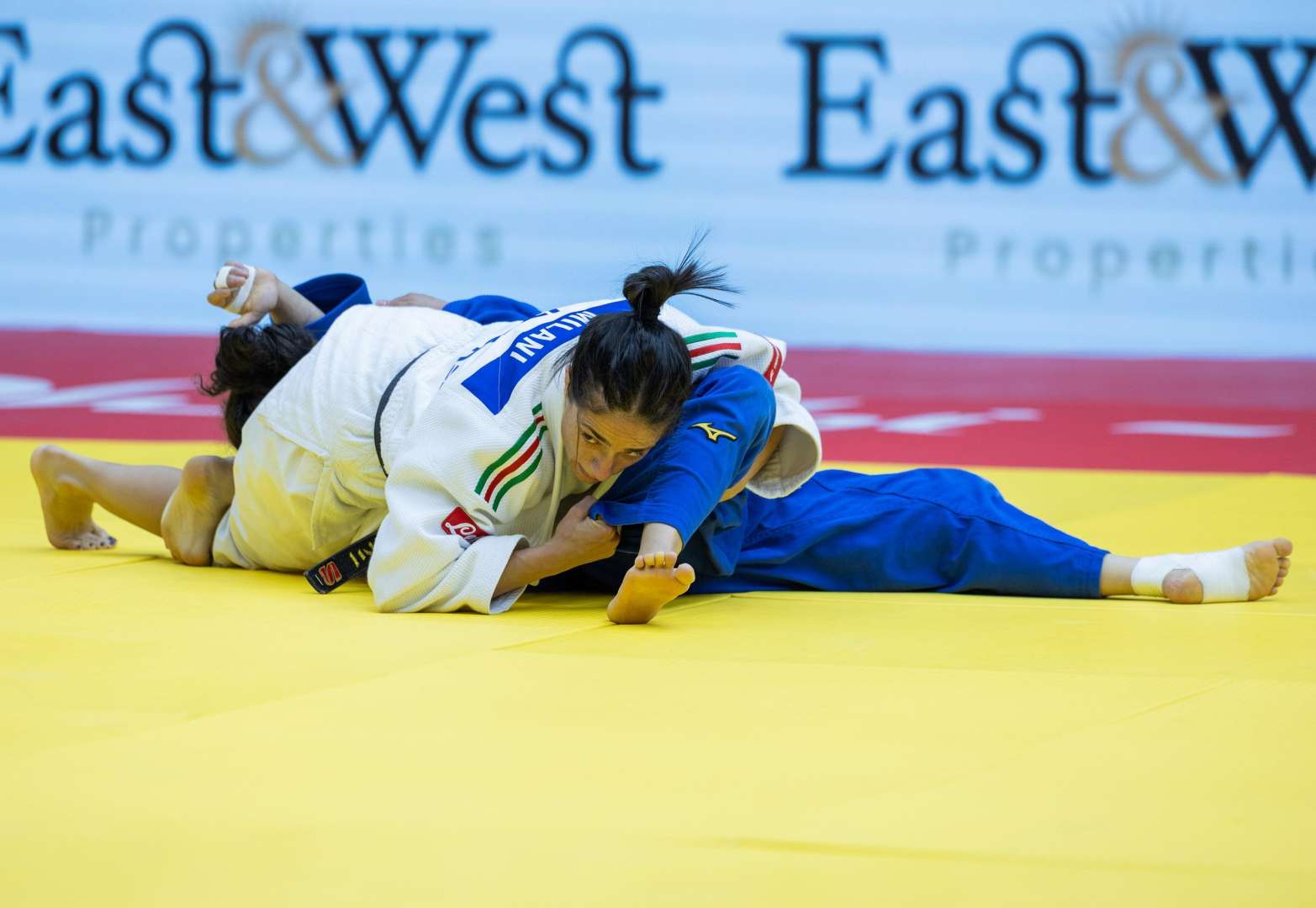
In Abu Dhabi, the work in ne-waza continues. In the first round of the -48 kg category, Francesca Milani (ITA) used a fast, well-prepared sankaku to turn her opponent on to her back, securing the osaekomi and winning the contest. It took only a minute of fighting time for her to claim the win and it was a chosen technique, not a chance occurrence.
Olympic champion Yeldos Smetov (KAZ) also won his first contest on the ground, in the -60 kg category, holding his rival for ippon.

Athletes are taking every opportunity to win and are preparing to do so long before they arrive at their competitions. Work on the ground is not an afterthought, it is a huge part of the technical range of a judoka and planning for its application at tournaments has become the norm.